


Travel around African fabrics and textile

Hello everyone,
We are living in an unprecedented period in our time, the closure of international borders due to the Coronavirus, which is certainly essential, is a difficult situation for all populations, and even more for travel lovers like me, installed on my little balcony, I have decided to offer you an extraordinary cultural trip, to make you discover some African materials and fabrics.
MyAfryka as you know is a window towards Africa that I wish to present to you, through tourism but also art and culture, new things are in preparation and I look forward to opening a new chapter with you.
Mrs Prue.
Bogolan

Originally from Mali, Just as its name suggests, Bogolan (Bogo = earth, Lan = from…) is a traditional fabric composed of cotton, clay earth and vegetable decoctions from leaves and bark of trees. The original patterns of this fabric were encodings with symbolic meanings used for specific rituals such as weddings or hunting. The manufacture of Bogolan is said to initially come from the Malian ethnic groups Sénoufo, Bambara, Dogon and Malinké, however, victim of its success, it is today manufactured in several countries including Burkina Faso, Ivory Coast, Senegal or Ghana again. Its ethnic and traditional aspect has made it a centerpiece for African designers.
Raffia
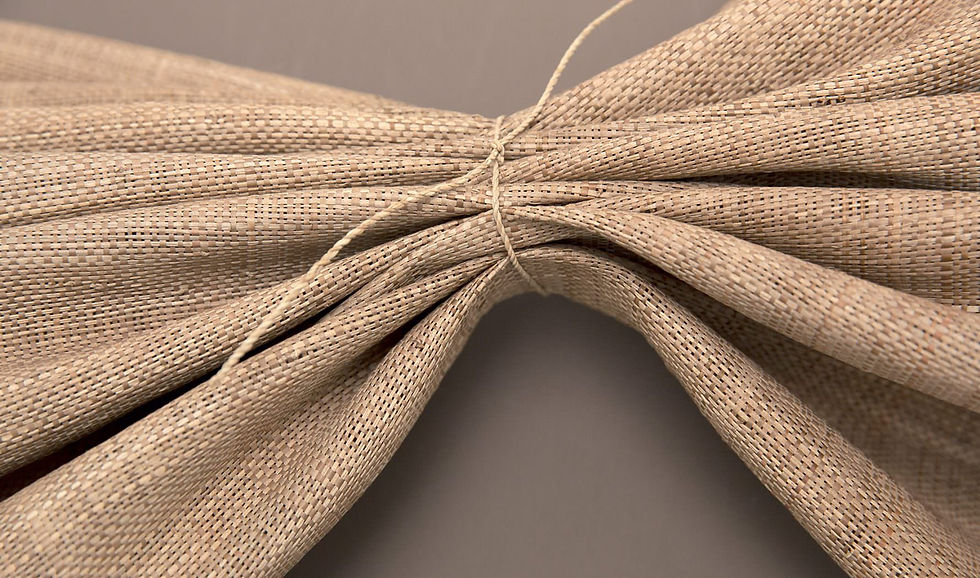
The Raffia is a tree, more precisely a palm tree living in marshy and fluvial environments. The leaves of this tree with many functions are used in particular to make the raffia fabric most often used to make rich and traditional outfits as in the Congo, Togo or even Madagascar. This textile, due to its strength, has naturally established itself as an original material for furnishings but also for fashion accessories. There are different versions of woven raffia, with or without patterns, colored or not, one of the most common forms being raffia velvets from Kuba du Kasai, which are embroidered raffia canvas with a velvety appearance, to add aesthetics and value, we can for example add cowries. More and more artisans of this material offer a range of products which are very successful in the design world today.
Lwili Peendé

Lwili Peendé is a loincloth with unique patterns that can be found in Burkina Faso, although its origin and meaning is a real mystery, the appearance of this motley black and red print with its swallows that carry a message dates back to the beginning. from the 1950s, it is difficult to find information on this famous fabric, some say it came from Khartoum when others attribute Senegalese origins to it… Its cheerful colors give it a rather festive use.
Kente (or Kita)

Kente, in the Akan language of Côte d'Ivoire Means basket, a brightly colored fabric with geometric shapes, comes to us from Ghana and more precisely from the Ashanti and Ewe people, it is a noble fabric associated with royalty, appeared in the around the 12th century in Ghana, the Kente or Kita remained a fabric of value which spread beyond the borders, it can also be found today in Ivory Coast. Made of cotton and silk its manufacture is traditionally exclusively male the art of weaving is taught to young men from adolescence in all the complexity of its symbolism, because the shapes and colors represented on the fabric have nothing to do with it. Hazardous, there is a meaning for each combination… Little anecdote: Did you know that Michaël Jackson received a kente loincloth during his enthronement as Prince in a village in Côte d'Ivoire?
Samakaka

Black Yellow and Red are the colors of the Angolan flag that we find on the Samakaka, The black represents the African continent, the red the blood spilled for freedom and the yellow for the wealth of Angola, this very “pop” fabric. In itself is commonplace in Angola, on outfits and fashion accessories. Originally a people, the Mumuilas, indigenous people who use this cotton fabric to cover their private parts. Being part of the everyday life of Angolans, it is also found during carnivals and other festive events.
Lépi

The Lepi, commonly known as the indigo of Guinea, or the blue of Guinea is an emblematic loincloth, coming from the Fulani of Guinea, its peculiarity as you will have understood is its only indigo color, very present in West Africa, it is dyed with plants and bark, the cotton fabric is very light and pleasant to the touch.
Le Toghu

The Toghu is a fabric from northern Cameroon, from the Bamenda region, these yellow, red and white patterns are generally embroidered on a black velvet background, displayed on traditional outfits, it has stood the test of time and modernized itself with many designers who use it on very contemporary collections!
Wax

If there is a fabric in Africa that creates controversy, it is Wax !!! This more than famous fabric has always been in vogue in African societies, women and men like to wear it but it has also become a popular material for interior decoration accessories, yet originally this fabric was nothing African. It is actually from Indonesian culture and imported by Dutch settlers around the year 1800, who did not hesitate to imitate the technique of wax printing of Indonesian patterns and then flood the African market with this new textile, and the success of Wax Hollandais, was not long in coming, it crossed time and generations by imposing itself and constantly reinventing itself. However, there is some reluctance due to the fact that wax represents for some a colonial symbol, but its fame is still at its peak to this day.


https://soicaulodechuan.mobi/dien-dan-xsmb mình ghé vào xem thử vì muốn tìm chỗ mọi người trao đổi về xổ số miền Bắc, cảm giác đầu tiên là nội dung được sắp xếp khá gọn. Phần mục lục chia theo từng mục đánh số nên đọc lướt cũng dễ nắm bài đang nói đến đâu, không bị rối khi trang có nhiều thông tin. Mình chủ yếu xem cách trình bày chứ không đi sâu đánh giá các con số, nhưng thấy bên dưới có khu vực bình luận để mọi người chia sẻ thêm thì khá đúng kiểu diễn đàn. Không khí nhìn chung thân thiện, ai muốn tham khảo nhận định khác cũng có chỗ để đọc qua. Mình thích nhất là…
https://tacobet.com.mx/pt-br/7k-bet/bonus/ Caí nessa página rapidinho e achei bem de boa de ler, sem aquele texto enrolado. O que mais curti foi que eles separam direitinho o que foi “confirmado” e o que ainda não dá pra ver publicamente, tipo não ficam chutando valor exato de bônus nem o rollover quando isso não tá claro. Também reparei que tem um comparativo marcado como atualizado em setembro de 2026, então dá pra ter uma noção de que não é conteúdo largado lá faz anos. No geral, a navegação fica leve porque os blocos são bem divididos por títulos, e a parte de perguntas frequentes aparece logo abaixo das seções principais, bem visível na página.
thoitiethomnay.org so với mấy app thời tiết mình từng dùng thì mở ra nhanh hơn, ít phải lướt, nhìn phát là nắm được tình hình; mình hay check theo tỉnh nên cái phần chọn tỉnh thành đặt ngay trên trang khá tiện, bấm cái là sang đúng trang địa phương, khỏi tìm trong menu lòng vòng; số liệu hiển thị kiểu thẳng thắn, có nhiệt độ hiện tại kèm “cảm giác như” và vài chỉ số cơ bản nên quyết định mặc gì cũng nhanh; mình để ý dữ liệu được cập nhật liên tục trong ngày nên lúc quay lại xem lại không bị cảm giác đang đọc thông tin từ sáng; chữ số nhiệt độ để to, dễ…
https://rr88m1.com/ lúc đầu mình cũng hơi lăn tăn, vì mấy trang kiểu này dạo gần đây nhìn hao hao nhau nên mình chỉ mở lên xem giao diện ra sao thôi; kéo xuống một chút thì thấy họ trình bày khá gọn, các khối nội dung tách bạch nên đọc lướt vẫn bắt nhịp được, chữ không quá rối; mình chú ý nhất là phần họ để thông tin nguồn gốc/pháp lý kiểu công khai ngay trên web, ai muốn kiểm tra nhanh thì đỡ phải mò; thao tác chuyển mục cũng ổn, bấm qua lại không thấy đứng hình hay chờ lâu; mình không vào sâu mấy phần game hay ưu đãi, chỉ xem cách sắp xếp cho người…
rr88 mình cũng kiểu nghe mọi người nói nhiều nên vào nghía thử cho biết chứ không có rảnh mà đọc kỹ. Vừa mở lên thấy trang nhìn sáng sủa, khoảng trắng vừa đủ nên không bị bí hay rối. Mình thích nhất là cách họ chia nội dung theo từng khối, kéo xuống tới đâu biết tới đó, không bị lẫn lộn. Có mấy chỗ trình bày dạng bảng cột nhìn gọn, liếc cái là hiểu ý chính luôn. Thanh menu đặt khá dễ thấy nên mình bấm qua lại vài mục thấy cũng nhanh, không phải mò mẫm tìm đường. Nói chung cảm giác dùng nhẹ nhàng, không bị “ngợp” như nhiều trang nhồi chữ. Nhìn chung điểm…